tpvets_logo.jpg (2726 bytes)

Toa Payoh Vets
toapayohvets.com 
26 Jan 2009

Toa Payoh Vets Clinical Research
Making veterinary surgery alive
to a veterinary student studying in Australia
using real case studies and pictures

EAR PROBLEMS IN DOGS
Ear pain and scratching all the time is a cause for concern but the owner usually thinks that the groomer will be able to resolve the problem as it is cheaper to consult the groomer than the veterinarian.

Vertical Ear Canal Ablation in the Dog
Dr Sing Kong Yuen, BVMS (Glasgow), MRCVS

Case updated: 25 Jan 2009 (Chinese New Year's Eve, 11.05pm)
First written: 13 Jun 2008

INCREDIBLE BUT TRUE STORY
--- UNCLOTTED BLOOD IN A DOG'S EAR

Things happen in threes. This is the first of the 3 "blood-related" incredible but true stories about my experiences in seeing blood with no apparent cause, within a period of 2 months in April and May 2008.

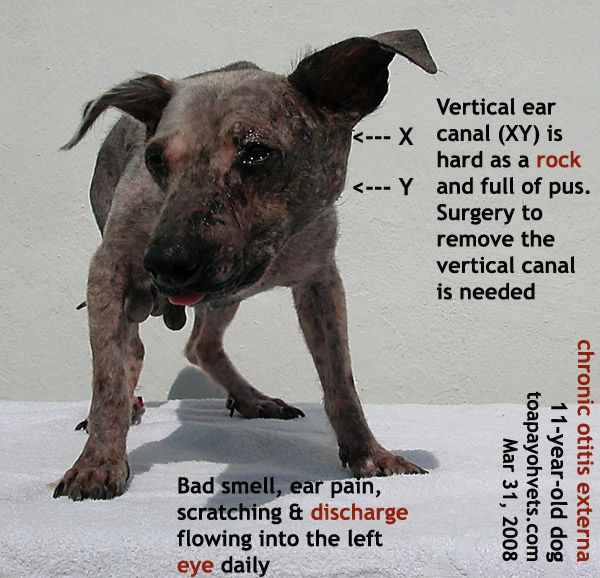
The old dog had been having ear pain and discharge and weepy left eye for some months. As the owner wanted to put the dog to sleep, I arranged for the dog transport man to bring the dog to my surgery. His wife objected.

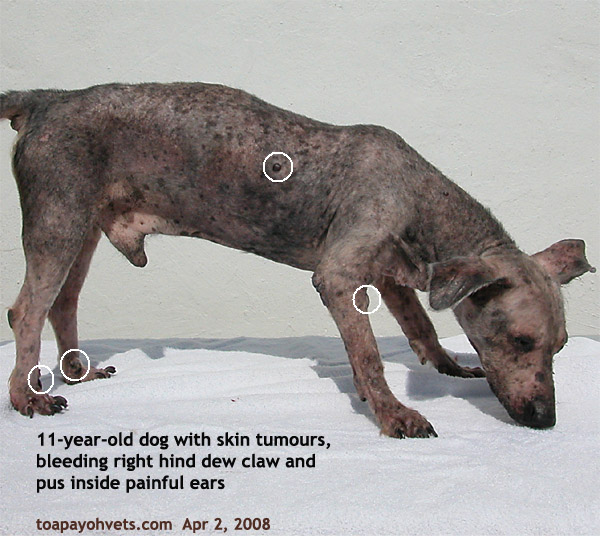
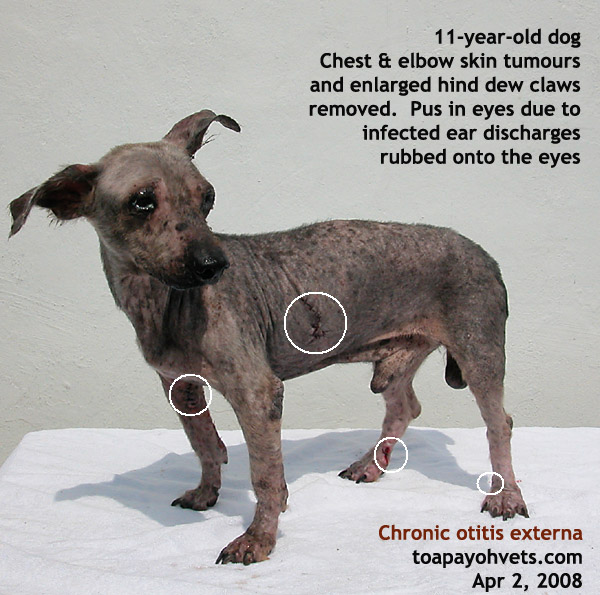
So, the dog was treated. The owner requested his skin growths to be removed. After that I advised the owner to bring the dog back for the ear surgery in 7 days' time as that was the primary problem. At the 7th day, the gentleman phoned: "I will wait a few more days." I said OK.

A few days later, he phoned saying that there was blood inside the dog's left ear. I got the dog transport man to send the dog. Yes, there were fresh unclotted blood in the dog's left ear. The blood was red but would never clot. Now all blood will clot in a normal dog. But the blood simply pool in the ear canal, as if
it had anti-clotting drugs given to it.

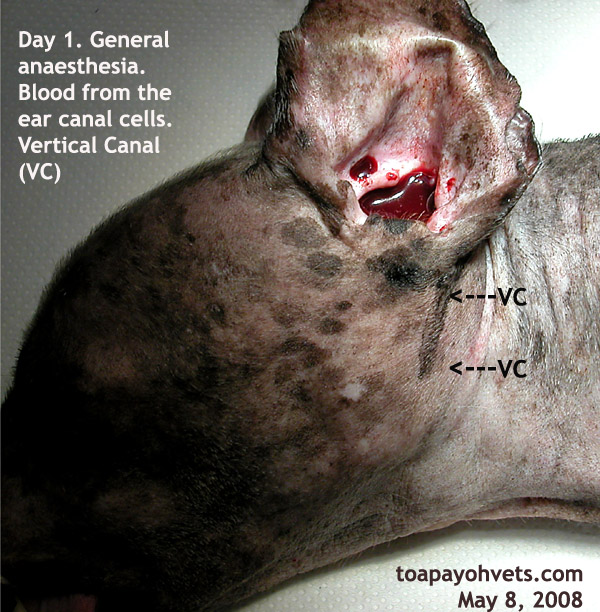
The dog must be scratching its ear and has self-inflicted damage to the ear. Yet, normally, there would be an aural haematoma - a swelling of the ear flap. This was just fresh unclotted blood inside the ear canal. I sent the dog back on antibiotics and scheduled to operate 7 days later. This time the owner kept his appointment. Yet there was still unclotted blood inside the left ear. I took a picture for readers to see.

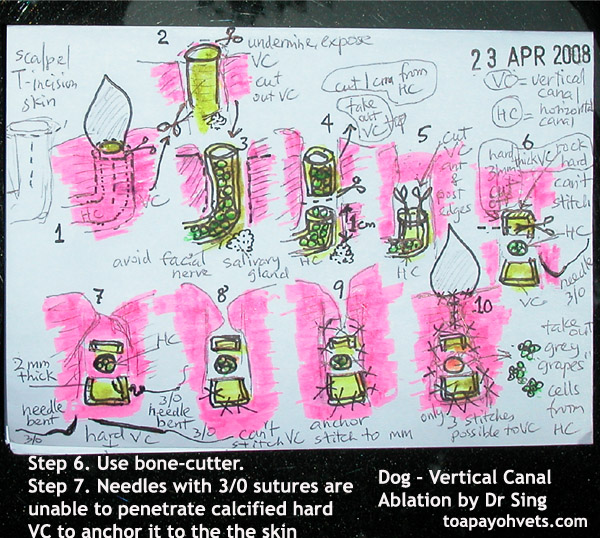
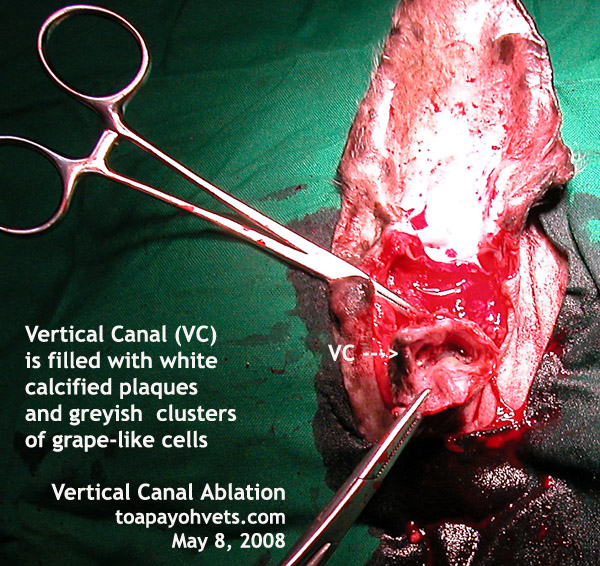
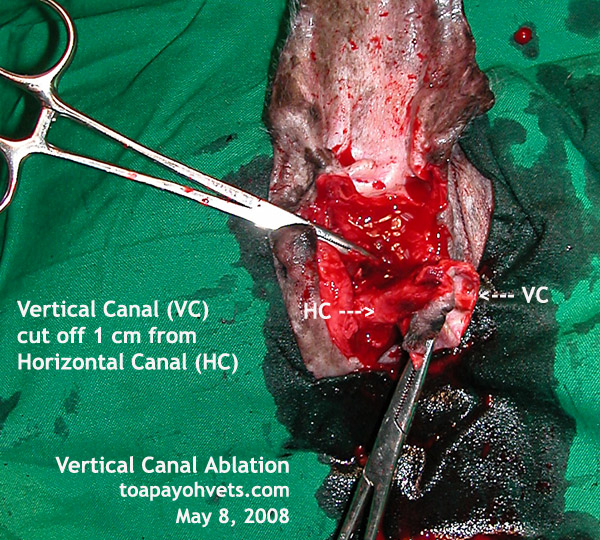
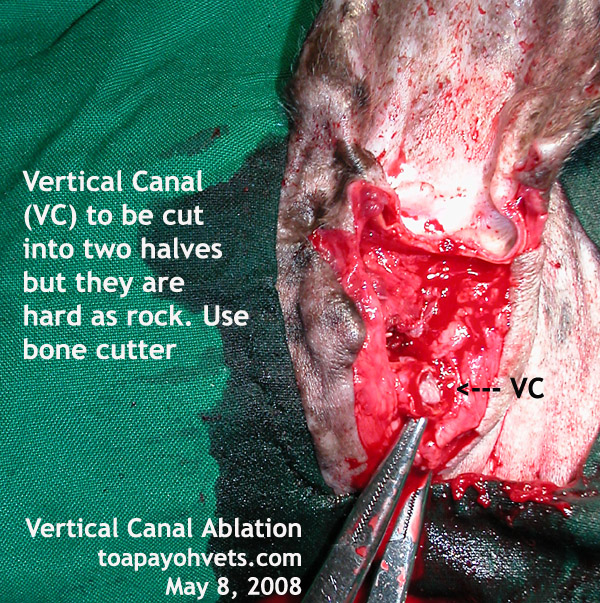
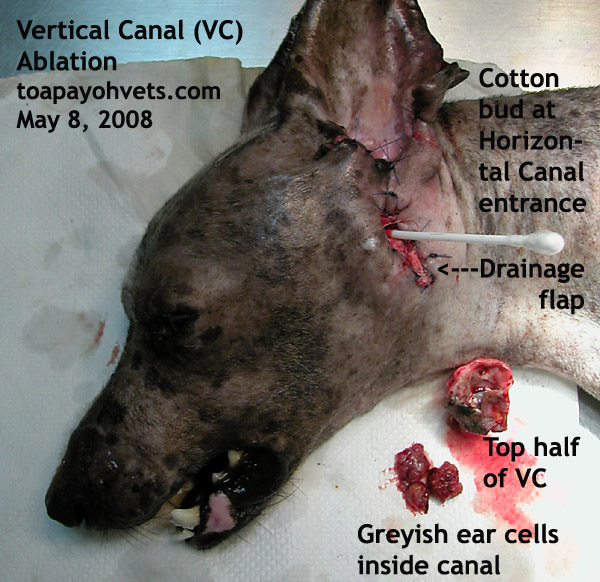
During surgery, I could see grey globules of cells inside the horizontal and middle canals. They could be ear cancerous cells. I did not do a histopathology as it would add up to the veterinary costs and it served no purpose for the owner. All owners want are least cost. The vertical ear canal was removed. Hard as a rock. I had to use a bone cutter to split it.
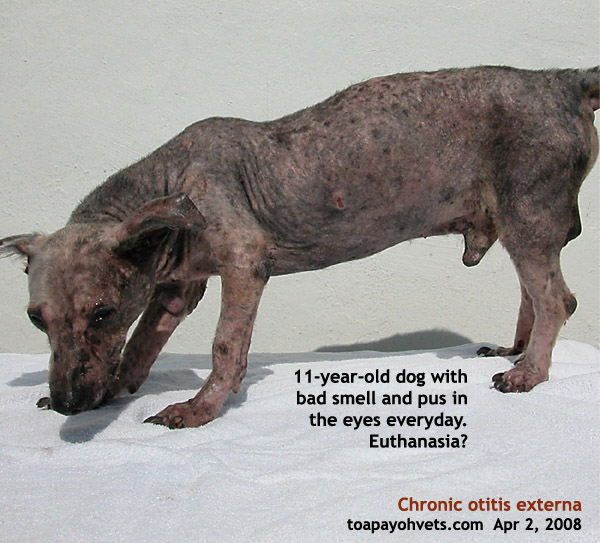
Chronic severe otitis externa. Old 11-year-old dog. Toa Payoh Vets
Tearing left eye and painful left ear for many months. Hair on body dropped. The owner wanted the skin tumours to be removed first.
 
11-year-old dog. Excellent appetite. Very smelly. Pus in eyes. Toa Payoh Vets.  Remove skin tumours when they are small. Clean ears regularly. Toa Payoh Vets
Old dog. Skin tumours. Pus in both ears. Pain. Toa Payoh Vets
Skin tumours removed. The dog was to come for ear surgery soon. But there was no smelly ear. The owner postponed the surgery.
 
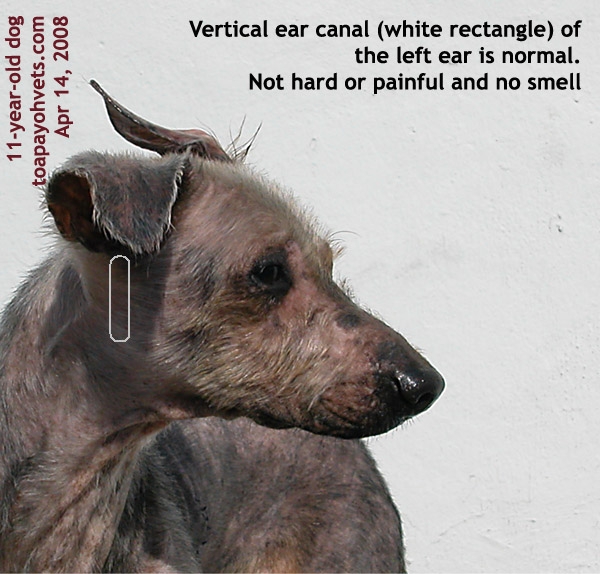
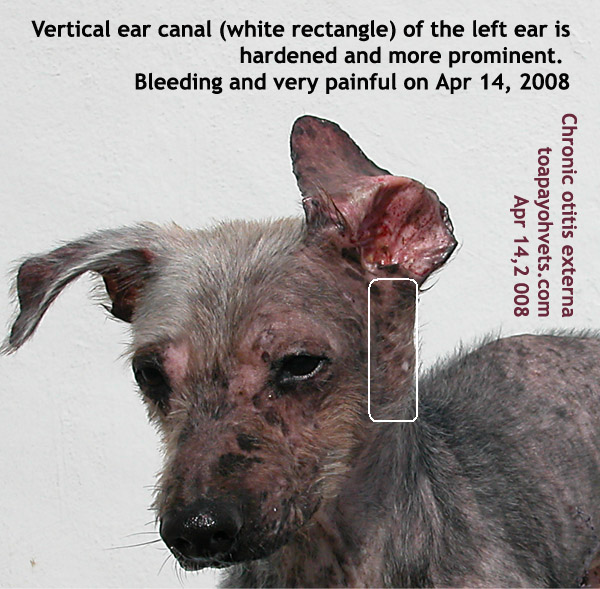
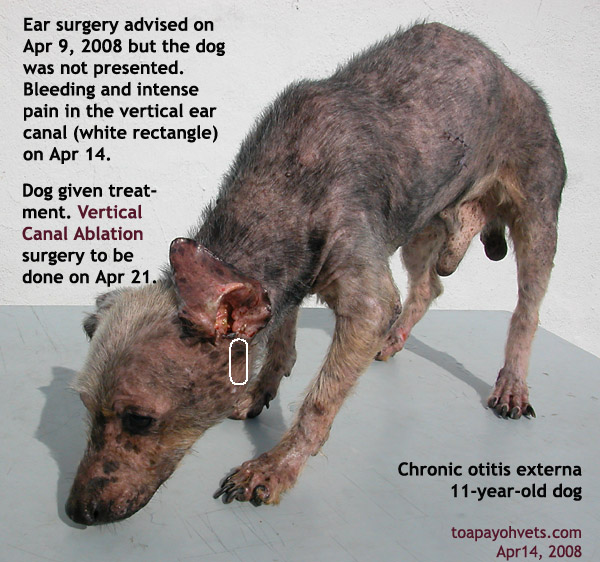
Otitis externa in right ear no longer present. Old dog. Toa Payoh Vets Chronic otitis externa left ear recur. Lots of bleeding and great pain. Old dog. Toa Payoh Vets
Chronic otitis externa, hardened vertical canal, left ear.Old dog. Toa Payoh Vets
The owner postponed the appointment for surgery on Apr 9, 2008.  Blood clotted in the ear canal. The dog went home. Blood appeared in the ear canal in large amounts but did not clot.  
Old Dog. Singapore. Calcified ear. Vertical canal ablation. Toa Payoh Vets
Unclotted blood appeared daily in the ear canal for at least 7 days after going home. The owner decided to get the surgery done on May 8, 2008.
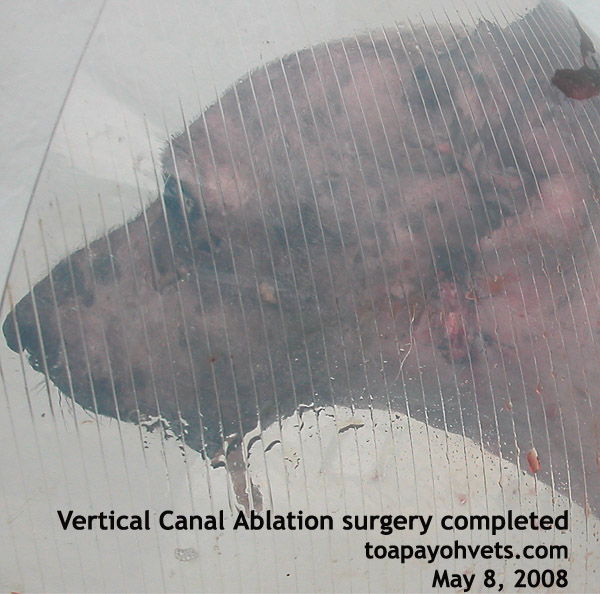
Dr Sing's illustration after completing vertical canal ablation. Toa Payoh Vets
The calcified vertical ear canal ablation surgery.
Old Dog. Singapore. Calcified ear. Vertical canal ablation. Toa Payoh Vets
The vertical ear canal is isolated from the surrounding tissues. Hard as a piece of rock.
Old Dog. Singapore. Calcified ear. Vertical canal ablation. Toa Payoh Vets Old Dog. Singapore. Calcified ear. Vertical canal ablation. Toa Payoh Vets
Old Dog. Singapore. Calcified ear. Vertical canal ablation. Toa Payoh Vets
Grape-like grayish ear canal cells clogged the vertical and horizontal canals. They appeared cancerous.
Old Dog. Singapore. Calcified ear. Vertical canal ablation. Toa Payoh Vets
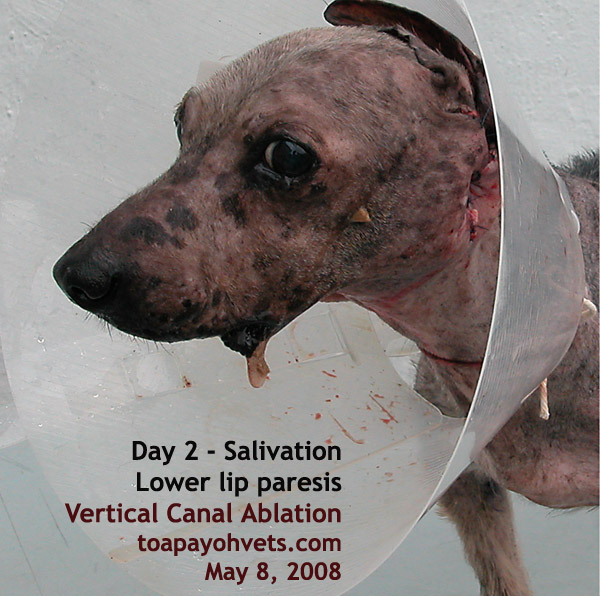
Salivation for 2 days after surgery.
Silkie Terrier 11 years old. Calcified vertical ear canal hard as a rock removed. Toa Payoh Vets.
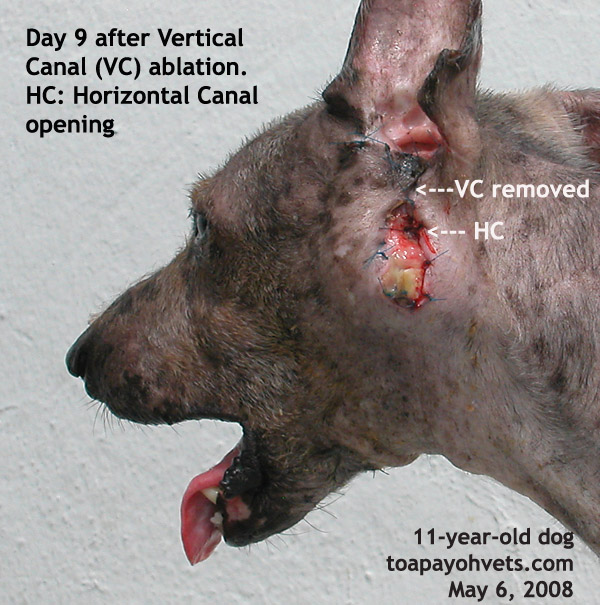
The owner's wife wanted the dog home. On day 9, the dog was sent home. But he disallowed the owner to clean his ear. The ear swelled and the operation area got infected.  

The owner's wife came to visit the dog on the 3rd day after surgery. She wanted the dog home after surgery. This was not advisable as the dog's ear needed careful nursing to prevent infection and stitch breakdown. Owners seldom are able to do the nursing yas they lack experience and may be bitten by the dog.

Once the stitches break down, there would be a big hole and the owner would construe that the vet is incompetent, as owners seldom blame themselves for the poor outcome of a surgery. In such a situation, I would advise that the husband be advised as the husband had not asked for the dog to be discharged. Ideally, the wound should be healed first and that would take 14 days at least.

However, to save on veterinary costs, the dog was discharged on day 9. After a few days, the owner sent the dog back as the dog had a swollen area in front of his surgery. The dog had been scratching and the horizontal canal opening had not been cleaned. The dog just would not permit the owner to do it.

So, another 10 days of stay and more veterinary expenses including the cost of several trips by the dog transport man. Fortunately, this was an owner who was able and willing to pay the expenses which could amount to a big sum in view of the to-and-fro of the dog and the transportation.

Vertical ear canal ablation needs a lot of nursing. It would have been cheaper to just let the dog stay at the surgery for 14 days and let the wound be cleaned daily by the veterinary assistant. The dog was quite fed up with the ear cleaning which must be painful for him. But he was muzzled and was more well behaved.

On the 9th day of nursing, before going home, I saw him wagging his tail when I examined him. As if he was happy to be free of his chronic ear pain. He was the ideal patient. A dog with no bark and bites only when he could not tolerate the pain of cleaning his wound.

As for the appearance of unclotted blood in his left ear for around 7 days, this was a mystery to me. Did the cancerous cells inside the hardened vertical ear canal produce an anti-clotting chemical or was there some divine significance? Why did the blood appear in the first place and where was its source? Some questions have no answer.

tpvets_logo.jpg (2726 bytes)Toa Payoh Vets Clinical Research
Making veterinary surgery alive
to a veterinary student studying in Australia
using real case studies and pictures

toapayohvets.com